
Adding your tour to Google Things to Do
6 min readWhat is Google Things to Do?
Google Things to Do links your tour's Major Landmarks directly to locations on Google Search and Google Maps. This link significantly increases discoverability across two of the most popular products used by travellers.
Things to Do on Google Maps
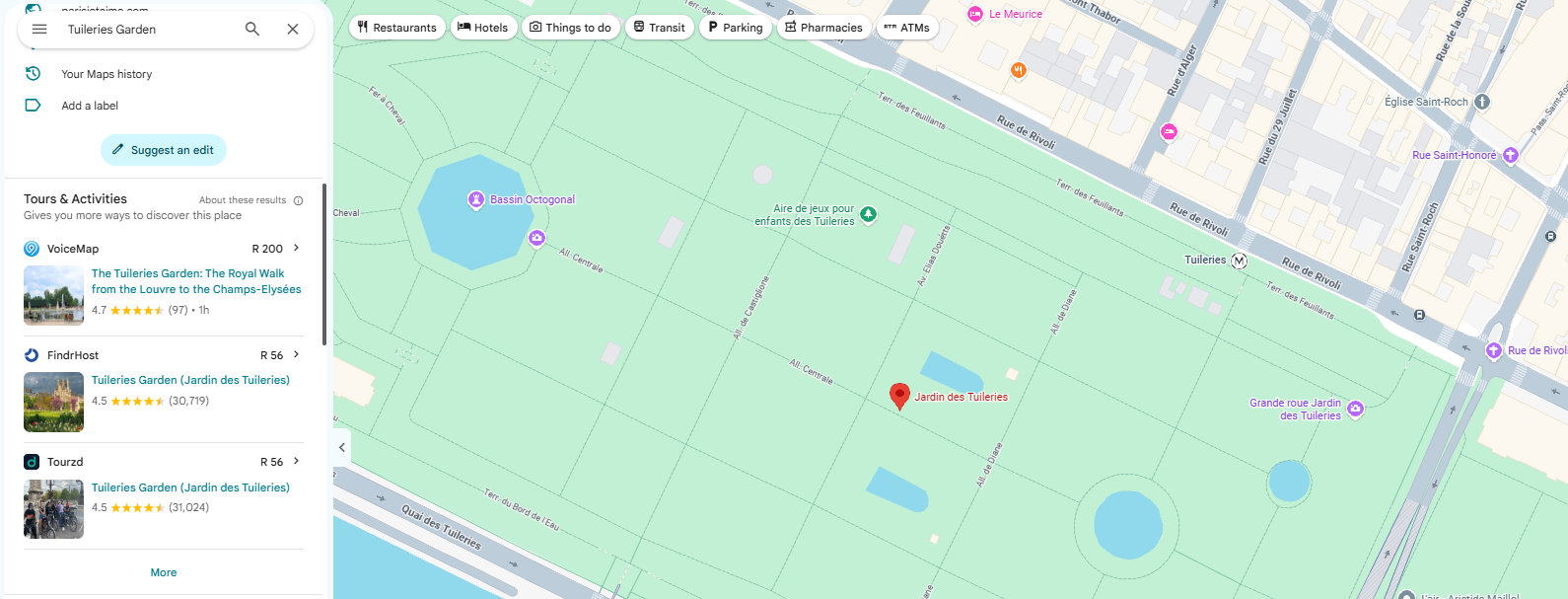
Google Maps is a perfect fit for VoiceMap tours because it's used for on-the-go queries by people who are comfortable navigating independently. When you're already in a destination, ready to go, scheduled tours that need to be booked in advance don't make nearly as much sense as on-demand, self-guided tours.
If your tour is correctly linked to the landmarks or attractions it passes by and describes, it'll display under Experiences for some but not all location types.
Things to Do on Google Search
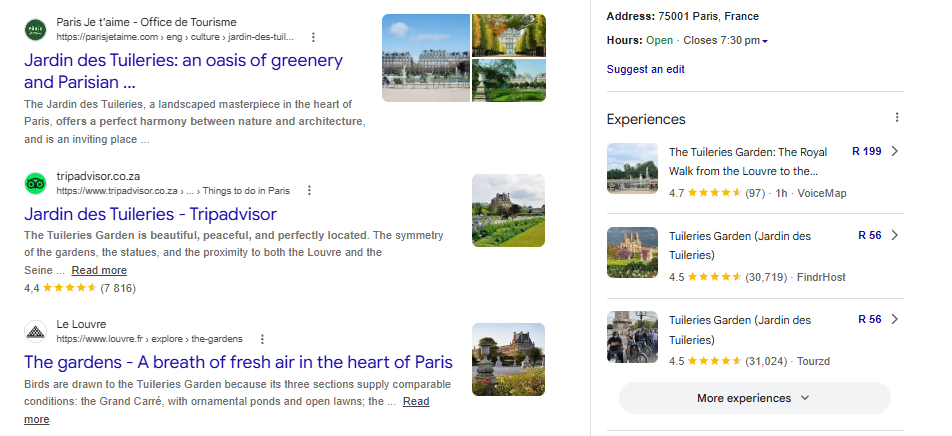
When somebody searches for a well known landmark, Google displays a knowledge panel to the right of the search results with an overview that includes related experiences. These landmarks typically have much more search activity than your tour will get on its own. It helps if your tour ranks highly enough to appear as one of the top three linked experiences in the knowledge panel. This is likely to come down to whether it has positive reviews, a strong photo, a low bounce rate when users click through to it and other quality indicators.
Adding landmarks to your tour
The best time to add landmarks is before you publish the tour as part of the final touches process. If your tour is already published, you can still add and update them in your tour’s Distribution tab. The steps below cover both options and most of the steps are exactly the same.
- Open your dashboard, scroll down to Your Tours, and find the relevant tour. If the tour’s not published yet, click on the “Edit” icon, open the Final Touches tab, and go to the Landmarks step. If your tour is already published, click on the “Distribution” icon next to the tour, open the Distribution tab, and click on Google Things To Do.
- For published tours, you can add an additional image. Your tour's cover image is used by default, but Things to Do listings perform better with images that are optimised for placement in Google Maps and Google Search results. The minimum dimensions are 1024px by 683px, but images that are 2048px by 1366px work best.
- Select a Starting Point Address. If your tour is published, click “Save” to keep your image and starting point address. You can update these separately from your landmarks.
- Under Landmarks (called Linked Landmarks on the Google Things To Do tab), start typing the name of a landmark and select the match from the suggestions. The city appears in brackets after each name. If the landmark appears here, it either means that there are already other tours on VoiceMap linked to it, or that there’s a VoiceMap Attraction page set up for it. Click on the correct landmark to add it to the list.
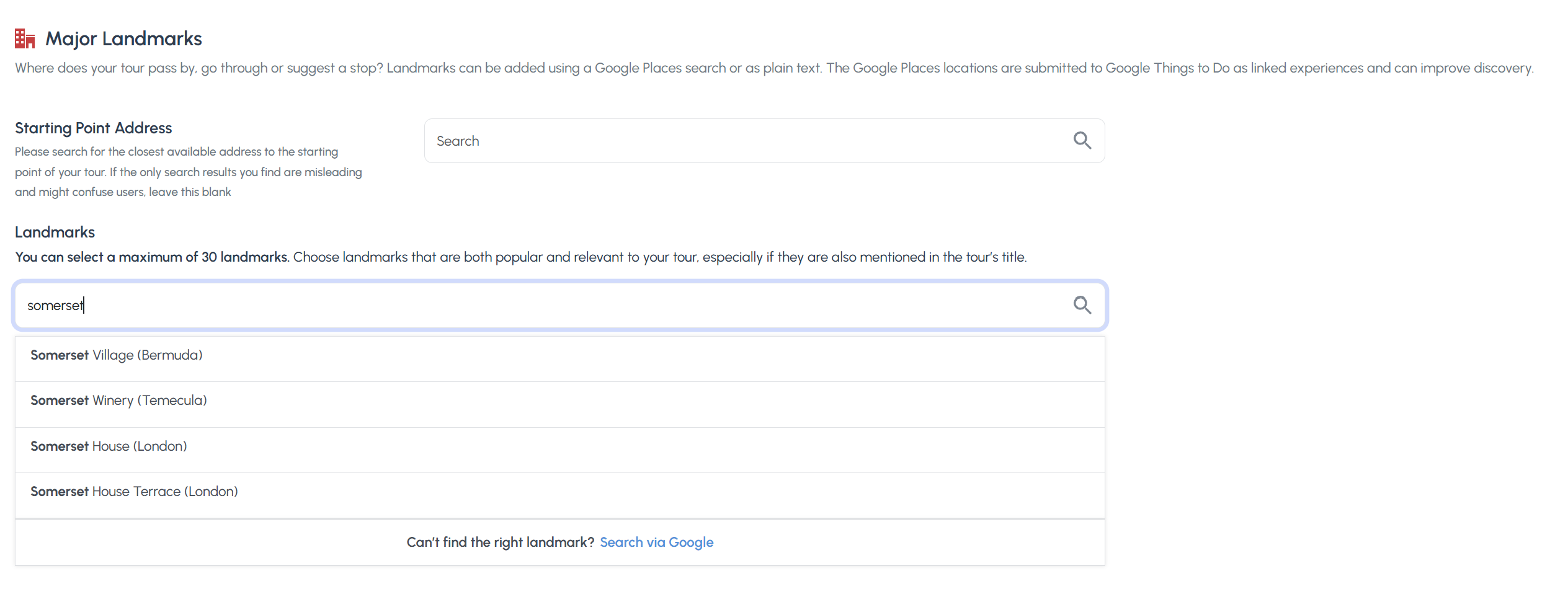
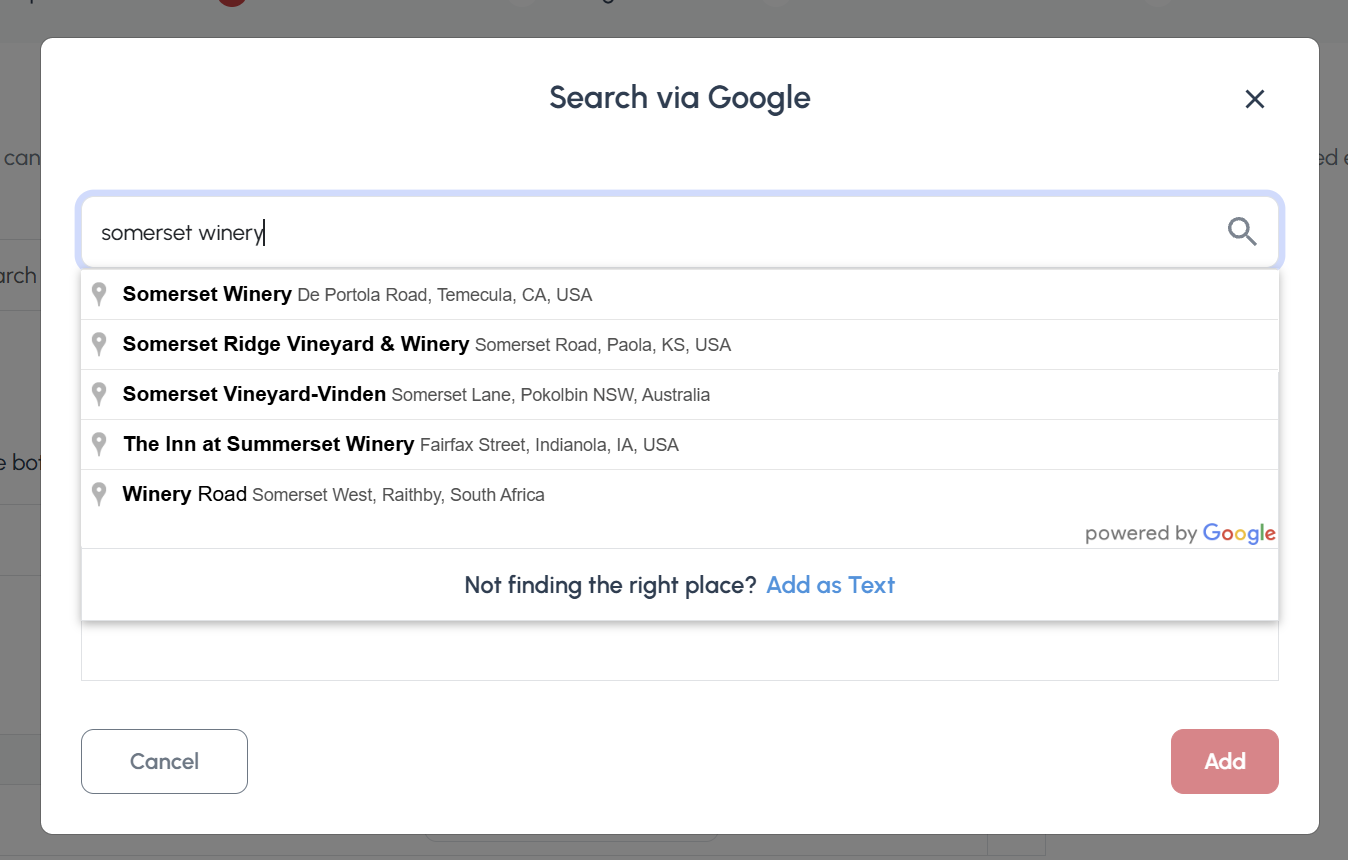
- If the landmark doesn't appear, click Search via Google and type the name in the search bar. Choose the correct place from the results, then click Add. Avoid Add as Text unless you really can't find the place, because a landmark added as plain text isn't linked to a Google Place ID. Google doesn't know where to place it, so it isn't sent to Google Things to Do and won't connect your tour to an attraction page.
- Once you’ve selected the landmark, use the Admission Included/Free menu to show whether the landmark charges admission. Choose “No” if there's no admission fee, “Yes (Not Included)” if listeners will have to pay extra, or “Yes (Included)” if admission is part of the tour price.
- If you previously added the same place as plain text, delete the text landmark and add a new linked one, so that it isn't listed twice.
- Drag the landmarks into the order in which listeners pass them on the route, and remove any you added by mistake with the X.
- Save your changes. If your tour isn't published yet, click “Save” to keep your work and come back later, or “Next” when you're happy with this step. Your landmarks are submitted with the rest of your final touches. If your tour’s already published, click “Save” to keep your landmark changes, then click “Submit” when you're happy with your selection and order to submit it to VoiceMap.
- Repeat these steps for each tour.
Best practices for adding landmarks
- Choose landmarks that are both popular and relevant to your tour, especially if they are also mentioned in the tour's title. Listeners search for the places they want to see, so these are the landmarks most likely to bring them to your tour.
- Avoid landmarks that are only seen at a distance or that you only mention briefly, so you set the right expectation.
- Link every major landmark your tour passes, not just the first few. Each linked landmark is another chance for your tour to be found, and you can add up to 30.
- Always search for a landmark instead of typing it in as text. A landmark added as plain text isn't linked to a Google Place ID, so Google doesn't know where to place it. It isn't sent to Google Things to Do and won't connect your tour to an attraction page.
- Check that you've chosen the right place. Many places share a name, such as St Mary's Church or Marktplatz, so check the street name or city of each result, and add the destination to your search if you need to. If you can't find a landmark by name alone, try alternative spellings.
- List the landmarks in the order in which listeners pass them. This helps listeners understand the route they'll follow, rather than just knowing which places they'll pass.
- If your tour is published, add an image that's optimised for Google Maps and Google Search. A strong photo is one of the things that helps your tour rank among the linked experiences.
What happens next
Once your tour is published, we send its landmarks to Google automatically. If you update the landmarks on a published tour, it can take 24 to 48 hours after you submit your changes for Google to receive them.